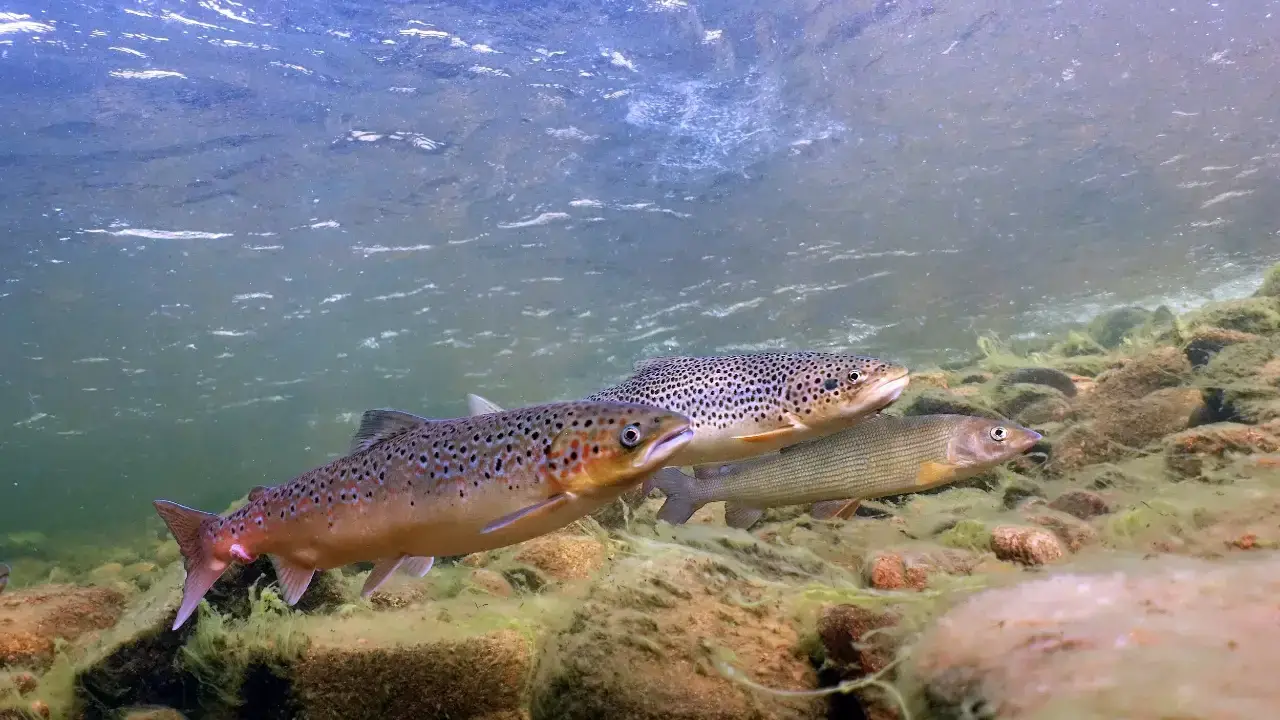
Salmon, trout and grayling live side by side in the Tanavass range. Photo: Mikko Kytokorpi
The wild salmon is a freshwater fish. That's because the wild salmon spawns in flowing fresh water. Freshwater offers a very variable environment. The wild salmon is a badass and can live in many places in a watercourse.
The wild salmon lives its first years in a river. The environment varies widely both within the same watercourse and between different watercourses. The water temperature can range from 0 degrees in winter to more than 20 degrees in summer. Water velocity varies from still waters in lakes to rumbling waterfalls and rapids in rivers. The water depth varies from shallow water near shore to many meters depth. Bottom conditions vary from mud and fine sand to large boulders and solid rock. The oxygen content of the water varies widely throughout the year and between different parts of the watercourse, but is rarely so low that the wild salmon suffocates.
Smaller salmon can be found in shallow water along land in large rivers, in the beach zone in lakes or in small streams. The main thing is that they find places to hide from fish-eating animals, and that they can find food themselves. They have camouflage that makes it difficult for enemies to detect them.
The competition between the small salmon for good hiding places and food is cutt-throat. The salmon that are best adapted to the conditions of the watercourse run away with the best places. They are the ones that grow the fastest and have the least chance of even being eaten.
Insect larvae are the main nutrients for the young salmon. In fresh water, they are small and do not provide enough energy for the salmon youth to grow large. In the sea there is a lot of food, and there is no competition between the wild salmon. If the salmon are to grow large, they must go to the sea. When they are at length of a ballpoint pen, they leave the river to wander to the sea and grow large.
The adult salmon return after one to five years to the birth river to give life to new generations. It spawns on running water with enough oxygen for the large rowan. Females dig spawning pits in places where the size of the stones in the gravel are suitably large.
We have devastated the wild salmon in many waterways, including through hydropower development, physical interventions, pollution, the introduction of diseases, alien parasites and fish species and escaped farmed salmon. Parliament has granted the wild salmon special protection in 52 waterways. We call these national salmon streams.
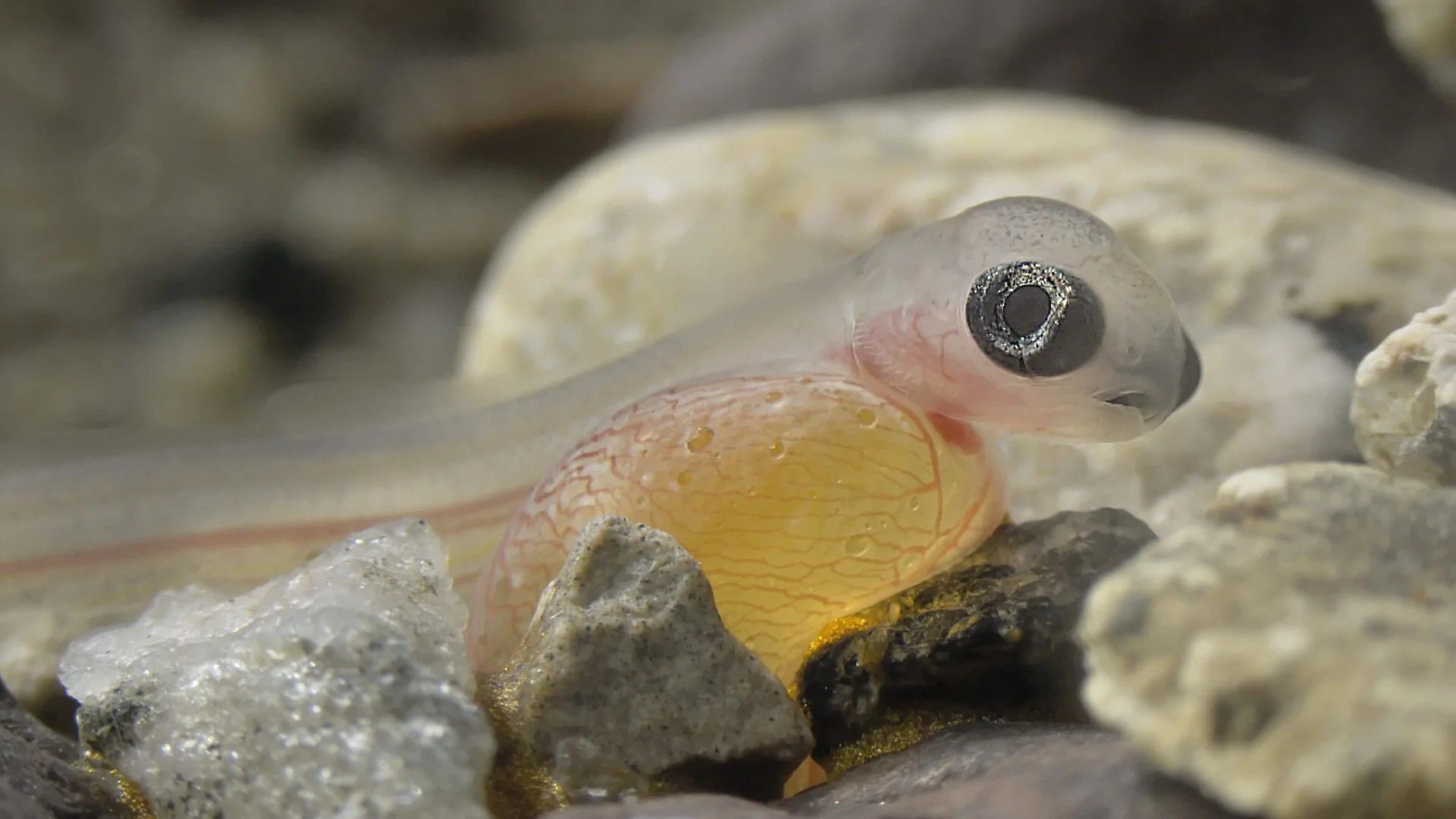
Plum sack fry. Photo: Arnt Mollan
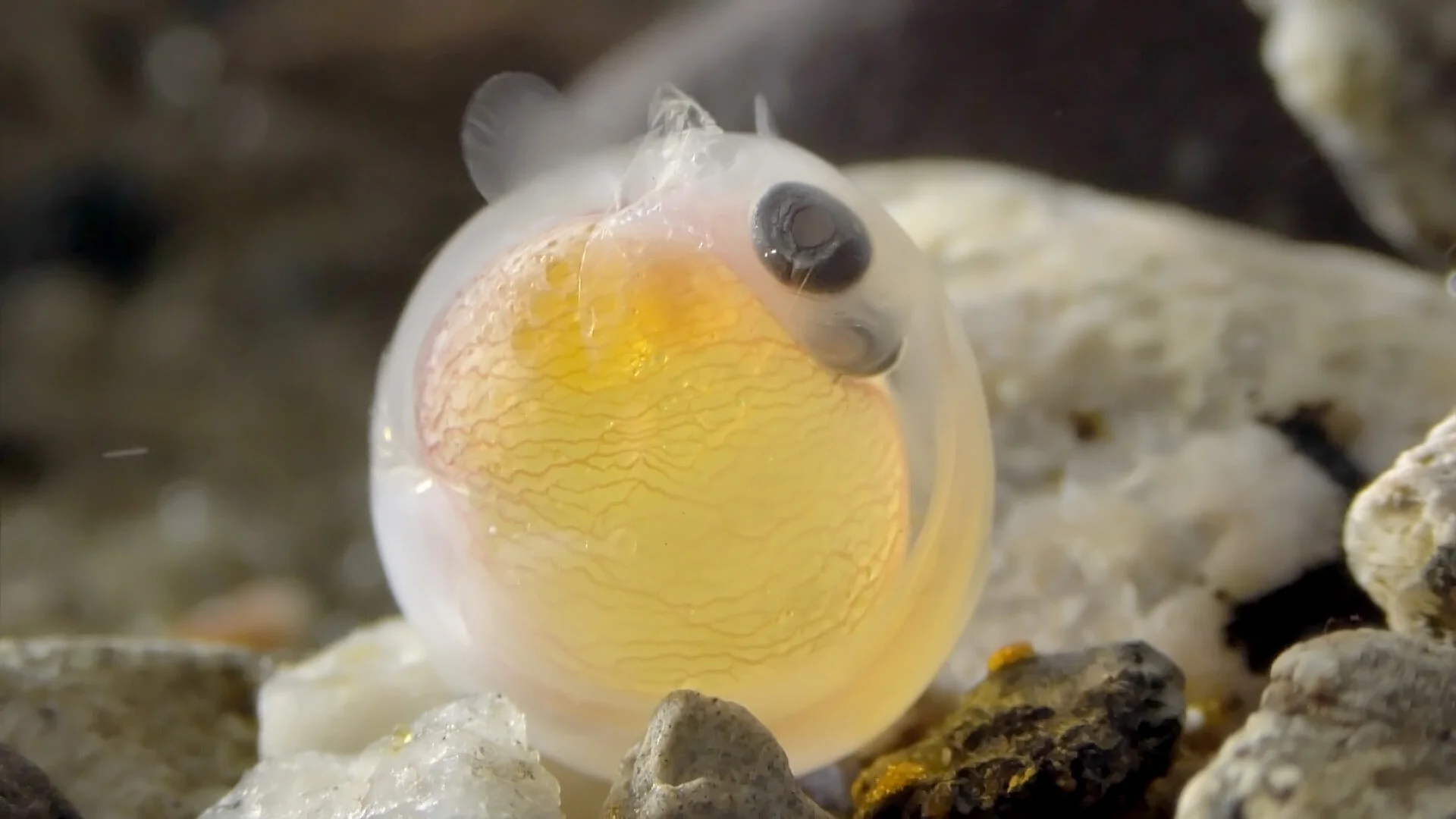
Eye roe. Photo: Arnt Mollan
Water is made up of molecules composed of two hydrogen atoms and one oxygen atom. Freshwater is heaviest at 4.2 degrees and lighter when it is both warmer and colder. Easiest is the water when frozen to ice. It's luck. It's easier to skate when the ice floats on top of the water. Imagine if the ice was heavier than water and lay at the bottom. What about the fish?
Kvåsveien 1500
4588 Kvås - Lyngdal
Org No. 915 380 972
The wild salmon is a part of our history and culture.
.png)